 By admin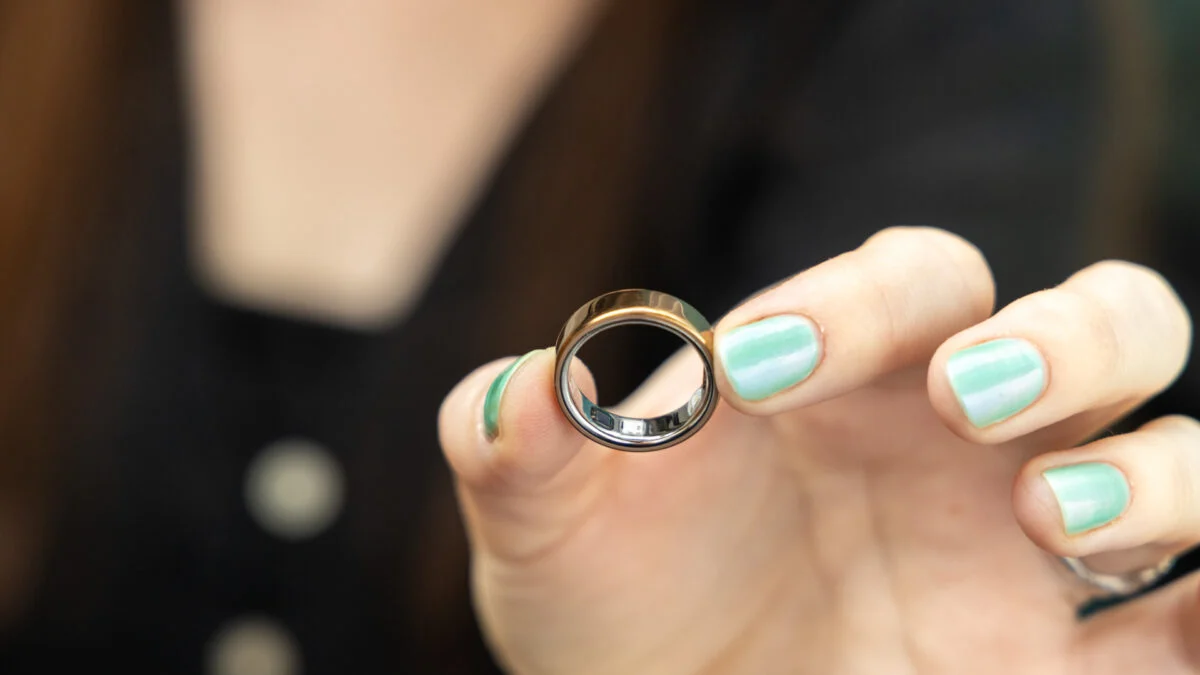
Contemporary smart rings like the Oura Ring 5 or the Samsung Galaxy Ring can offer a wealth of insights into heart health and sleep, but they’re still largely limited by what their optical sensors can track. According to a new study published in Nature Communications, researchers from the University of California, San Diego may have found a way forward by integrating a chemical sensor that examines finger sweat into a ring form factor to paint a more detailed picture of your health.
Read more Ozlo’s Tiny New Sleep Earbuds Can Outlast the Biggest Oversleepers
The prototype ring the researchers created, dubbed the Continuous Health Analyzing Ring Module (CHARM) in the paper, clamps around a person’s finger and wirelessly shares data with a smartphone. Rather than invasively drawing blood or forcing the wearer to work out to produce sweat, the ring uses an osmotic hydrogel that relies on the principles of osmosis to naturally draw sweat out. The sweat is then run through electrochemical sensors to track changes in six biomarkers—glucose, ketone, ascorbic acid, uric acid, lactate, and alcohol—measuring four at a time. Combined, they could offer a different angle on a wearer’s response to nutrition and exercise. Continuous glucose and ketone monitoring may also help with determining optimal insulin dosage, especially for diabetics.
“Commercial rings only provide biophysical information, but they lack molecular information about biochemical markers that offer deeper insights about an individual’s health status,” Tamoghna Saha, a postdoctoral researcher and the first author on the study, said in a statement.
Read more Somebody Remind Me Why Game Discs Are So Great Again?
In trials with participants with and without Type 1 diabetes, CHARM’s sweat analysis was able to closely match glucose measurements from a continuous glucose monitor, and its ketone data similarly matched a traditional blood meter. It’s worth noting, though, that while the ring appears to work, it still needs to be “validated comprehensively” in different clinical settings and with the “full glycemic spectrum” before it could be considered an alternative method to existing tools. The study states that “sustained multi-day monitoring will also require further advances in hydrogel engineering,” and things like battery performance—the ring lasts for 12 hours on a charge but doesn’t include a way to be conveniently recharged—also need to be improved.
Still, the idea of a future smart ring combining existing biophysical sensors with new chemical ones is intriguing, especially while cracking noninvasive glucose monitoring remains a top goal for wearable makers. There’s an inherent fussiness to the gel and clamp design of CHARM that likely wouldn’t fly with companies like Apple or Samsung, but if the same methods can be streamlined, your finger could prove to be even more important health-tracking real estate than your wrist.
Read more This Smart Door Knob With Fingerprint Reader Keeps Your Kids Out of Your Office